

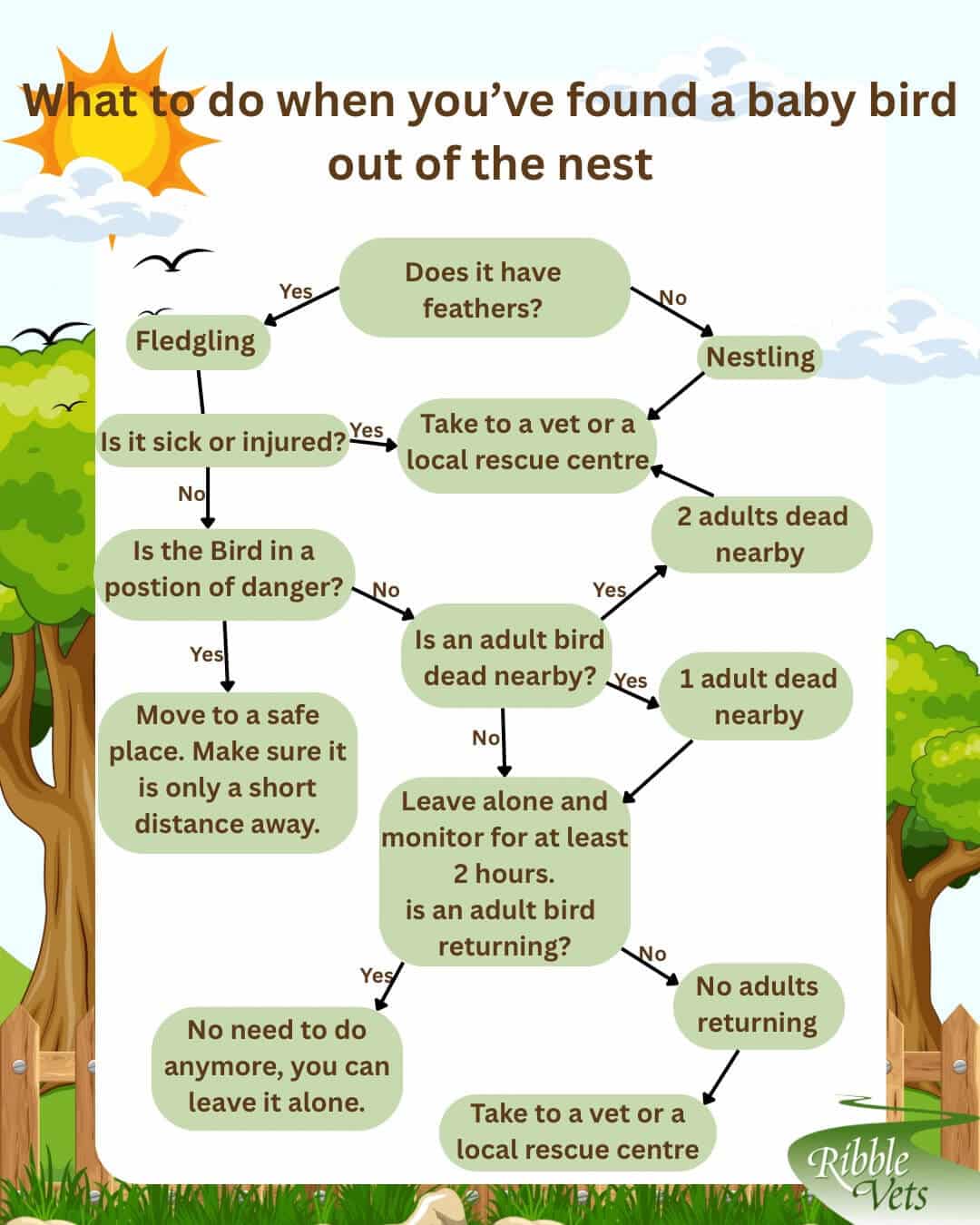

Is it safe out the nest?
Our first instinct might be to pick them up and care for them. However, this isn’t always the best thing for them and can actually reduce their chance of survival. Most of the time it is better to leave them alone.
How do I know if it should be on the ground?
Take a look to see if it has any feathers. There are 2 types of baby bird – Nestlings and Fledglings.
Fledglings have feathers, and most of the time it is best to leave them on the ground as soon they will be learning to fly.
Nestlings have very few or no feathers, and they cannot survive out of their nest.
If you find a nestling, or an injured or unwell fledgling, it is best to seek advice from a wildlife rescue organisation.
It has feathers, will it be safe?
Baby birds that have already grown feathers should usually be left where they are. It is natural for fledglings to leave the nest and spend a couple of days to a week on the ground just before they learn to fly.
They might appear to be a bit clumsy, but it is all part of the learning process. The parents are probably nearby bringing them food and watching their young’s first attempt at flying.
Removing a fledgling should always be a last resort, for example, if the bird is injured or has been abandoned or orphaned. If you think this is the case, contact a wildlife rescue centre for advice.
If the fledgling is in a dangerous place i.e. on a road you can move it to a safe place as long as it is only a short distance away.
How can I protect the baby bird from danger?
If a Fledgling is out of its nest and in immediate danger, then you can pick it up (using gloves if you can) and move it a short distance to somewhere safe (no more than a few metres away).
You can look for somewhere with shelter like a hedge and where the parents will still be able to find them easily.
If a Nestling is out of its nest and if you can locate the nest it’s fallen from, then gently pick it up (using gloves if you can) and carefully place the bird back inside.
Parent birds will not reject their young due to human scent – this is a common myth and shouldn’t stop you from helping.
If the bird is injured or has been abandoned or orphaned (both parents are dead) then you should contact a wildlife rescue or a vets straight away.
How can I tell if the baby bird has been orphaned?
You should only take baby birds to a rescue or vets as a last resort if:
- They’re sick or injured
- You know for sure that the parents are dead
- You’ve continuously monitored from a distance for more than two hours and the parents haven’t returned
If this is the case, you should contact your local wildlife centre or vet as soon as possible.
What do I do if the baby bird is injured/abandoned/orphaned?
If intervention is essential, carefully place the baby bird in a secure, well-ventilated box lined with a soft cloth, towel or blanket. Keep the box somewhere warm, quiet and dark to minimise stress.
Contact a local wildlife rescue or rehabilitation centre as soon as possible for advice. Do not offer food or water unless specifically advised to do so by a wildlife rehabilitator or veterinary professional, as this can do more harm than good.
Bottom line: remember that the majority of “abandoned” baby birds are perfectly healthy fledglings whose parents are nearby and watching out for them. Please don’t ‘bird-nap’ them from their parents. Birds take far better care of their young than humans can. Taking baby birds into captivity can dramatically reduce their chances of long-term survival. Most of the time it is better to leave them alone.
More Information
RSPCA – Injured Wildlife Advice: www.rspca.org.uk/adviceandwelfare/wildlife/injured
Preston Hedgehog & Bird Rescue Ltd: www.facebook.com/prestonhedgehogrescueltd/


